


Page 21 - North Haven Magazine Issue 25 Autumn 2022
P. 21
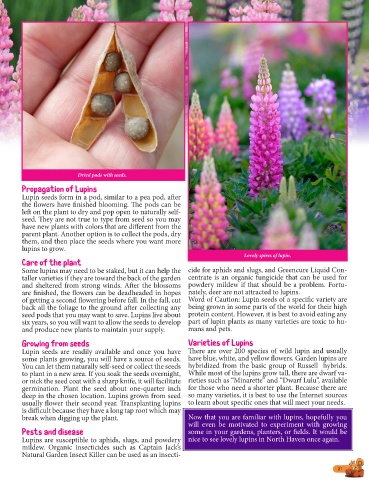
Dried pods with seeds.

        Propagation of Lupins
        Lupin seeds form in a pod, similar to a pea pod, after
        the flowers have finished blooming. The pods can be
        left on the plant to dry and pop open to naturally self-
        seed. They are not true to type from seed so you may
        have new plants with colors that are different from the
        parent plant. Another option is to collect the pods, dry
        them, and then place the seeds where you want more
        lupins to grow.
                                                                                 Lovely spires of lupin.
        Care of the plant
        Some lupins may need to be staked, but it can help the  cide for aphids and slugs, and Greencure Liquid Con-
        taller varieties if they are toward the back of the garden  centrate is an organic fungicide that can be used for
        and sheltered from strong winds. After the blossoms  powdery mildew if that should be a problem. Fortu-
        are finished, the flowers can be deadheaded in hopes  nately, deer are not attracted to lupins.
        of getting a second flowering before fall. In the fall, cut  Word of Caution: Lupin seeds of a specific variety are
        back all the foliage to the ground after collecting any  being grown in some parts of the world for their high
        seed pods that you may want to save. Lupins live about  protein content. However, it is best to avoid eating any
        six years, so you will want to allow the seeds to develop  part of lupin plants as many varieties are toxic to hu-
        and produce new plants to maintain your supply.        mans and pets.

        Growing from seeds                                     Varieties of Lupins
        Lupin seeds are readily available and once you have  There are over 200 species of wild lupin and usually
        some plants growing, you will have a source of seeds.  have blue, white, and yellow flowers. Garden lupins are
        You can let them naturally self-seed or collect the seeds  hybridized from the basic group of Russell  hybrids.
        to plant in a new area. If you soak the seeds overnight,  While most of the lupins grow tall, there are dwarf va-
        or nick the seed coat with a sharp knife, it will facilitate  rieties such as “Minarette” and “Dwarf Lulu”, available
        germination. Plant the  seed  about one-quarter  inch  for those who need a shorter plant. Because there are
        deep in the chosen location. Lupins grown from seed  so many varieties, it is best to use the Internet sources
        usually flower their second year. Transplanting lupins  to learn about specific ones that will meet your needs.
        is difficult because they have a long tap root which may
        break when digging up the plant.                       Now that you are familiar with lupins, hopefully you
                                                               will even be motivated to experiment with growing
        Pests and disease                                      some in your gardens, planters, or fields. It would be
        Lupins are susceptible to aphids, slugs, and powdery  nice to see lovely lupins in North Haven once again.
        mildew. Organic  insecticides  such as  Captain Jack’s
        Natural Garden Insect Killer can be used as an insecti-

                                                                                                               21

