


Page 24 - North Haven Magazine Issue 12 Winter 2020
P. 24
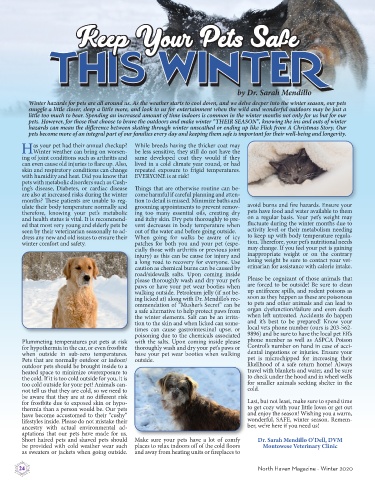
by Dr. Sarah Mendillo
          Winter hazards for pets are all around us. As the weather starts to cool down, and we delve deeper into the winter season, our pets
          snuggle a little closer, sleep a little more, and look to us for entertainment when the wild and wonderful outdoors may be just a
          little too much to bear. Spending an increased amount of time indoors is common in the winter months not only for us but for our
          pets. However, for those that choose to brave the outdoors and make winter “THEIR SEASON”, knowing the ins and outs of winter
          hazards can mean the difference between skating through winter unscathed or ending up like Flick from A Christmas Story. Our
          pets become more of an integral part of our families every day and keeping them safe is important for their well-being and longevity.

            as your pet had their annual checkup?  While breeds having the thicker coat may
        HWinter weather can bring on worsen-  be less sensitive, they still do not have the
        ing of joint conditions such as arthritis and  same developed coat they would if they
        can even cause old injuries to flare up. Also,  lived in a cold climate year round, or had
        skin and respiratory conditions can change  repeated exposure to frigid  temperatures.
        with humidity and heat. Did you know that  EVERYONE is at risk!
        pets with metabolic disorders such as Cush-
        ing’s disease, Diabetes, or cardiac disease  Things that are otherwise routine can be-
        are also at increased risks during the winter  come harmful if careful planning and atten-
        months? These patients are unable to reg-  tion to detail is missed. Minimize baths and
        ulate their body temperature normally and  grooming appointments to prevent remov-  avoid burns and fire hazards. Ensure your
        therefore, knowing your pet’s metabolic  ing too many essential oils, creating dry   pets have food and water available to them
        and health status is vital. It is recommend-  and itchy skin. Dry pets thoroughly to pre-  on a regular basis. Your pet’s weight may
        ed that most very young and elderly pets be  vent decreases in body temperature when   fluctuate during the winter months due to
        seen by their veterinarian seasonally to ad-  out of the water and before going outside.   activity level or their metabolism needing
        dress any new and old issues to ensure their  When going for walks be aware of icy   to keep up with body temperature regula-
        winter comfort and safety.           patches for both you and your pet (espe-  tion. Therefore, your pet’s nutritional needs
                                             cially those with arthritis or previous joint   may change. If you feel your pet is gaining
                                             injury) as this can be cause for injury and   inappropriate weight or on the contrary
                                             a long road to recovery for everyone. Use   losing weight be sure to contact your vet-
                                             caution as chemical burns can be caused by   erinarian for assistance with calorie intake.
                                             road/sidewalk salts. Upon coming inside
                                             please thoroughly wash and dry your pet’s   Please be cognizant of those animals that
                                             paws or have your pet wear booties when   are forced to be outside! Be sure to clean
                                             walking outside. Petroleum jelly (if not be-  up antifreeze spills, and rodent poisons as
                                             ing licked at) along with Dr. Mendillo’s rec-  soon as they happen as these are poisonous
                                             ommendation of “Musher’s Secret” can be   to pets and other animals and can lead to
                                             a safe alternative to help protect paws from   organ dysfunction/failure and even death
                                             the winter elements. Salt can be an irrita-  when left untreated. Accidents do happen
                                             tion to the skin and when licked can some-  and it’s best to be prepared! Know your
                                             times can cause gastrointestinal upset or   local vets phone number (ours is 203-562-
                                             poisoning due to the chemicals associated   9896) and be sure to have the local pet ER’s
        Plummeting temperatures put pets at risk  with the salts. Upon coming inside please   phone number as well as ASPCA Poison
        for hypothermia in the car, or even frostbite  thoroughly wash and dry your pet’s paws or   Control’s number on hand in case of acci-
        when outside in sub-zero temperatures.  have your pet wear booties when walking   dental ingestions or injuries. Ensure your
        Pets that are normally outdoor or indoor/  outside.                       pet is microchipped for increasing their
        outdoor pets should be brought inside to a                                likelihood of a safe return home! Always
        heated space to minimize overexposure to                                  travel with blankets and water, and be sure
        the cold. If it is too cold outside for you, it is                        to check under the hood and in wheel wells
        too cold outside for your pet! Animals can-                               for smaller animals seeking shelter in the
        not tell us that they are cold, so we need to                             cold.
        be aware that they are at no different risk
        for frostbite due to exposed skin or hypo-                                Last, but not least, make sure to spend time
        thermia than a person would be. Our pets                                  to get cozy with your little loves or get out
        have become accustomed to their “cushy”                                   and enjoy the season! Wishing you a warm,
        lifestyles inside. Please do not mistake their                            wonderful, SAFE, winter season. Remem-
        ancestry with actual environmental ad-                                    ber, we’re here if you need us!
        aptations that our pets have made for us.
        Short haired pets and shaved pets should  Make sure your pets have a lot of comfy   Dr. Sarah Mendillo O’Dell, DVM
        be provided with cold weather wear such  places to relax indoors off of the cold floors   Montowese Veterinary Clinic
        as sweaters or jackets when going outside.  and away from heating units or fireplaces to


       24                                                                            North Haven Magazine - Winter 2020

