


Page 32 - North Haven Magazine Issue 24 Summer 2022
P. 32
Girl Scouts and Gardeners Participate in
     Girl Scouts and Gardeners Participate in
      Experimental
      Experimental


                                                                 Tree Project
       Chestnut
       Chestnut                                                  Tree Project


                                                by Sally Brockett


            he Daytime Gardeners of North Haven and Girl Scout Troop
        T#60387, led by Lisa McCann, and Troop #60421, led by Jenni-
        fer Morgan, are participating in a two-phase experiment organized
        by Walt Brockett, member of the garden club and retired licensed
        arborist.


        Background history:  Walt initiated this project in 2015 to restore
        native American Chestnut (Castanea dentata) trees into the 220-
        acre Peter’s Rock Park, a town owned wooded property. Until the
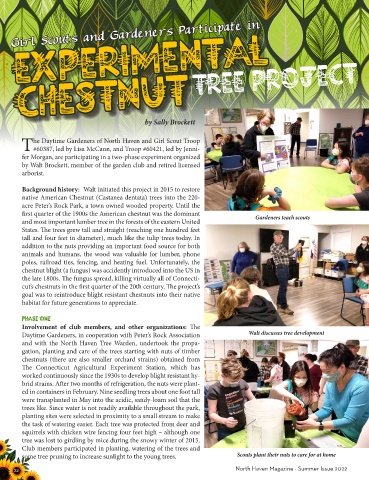
        first quarter of the 1900s the American chestnut was the dominant           Gardeners teach scouts
        and most important lumber tree in the forests of the eastern United
        States. The trees grew tall and straight (reaching one hundred feet
        tall and four feet in diameter), much like the tulip trees today. In
        addition to the nuts providing an important food source for both
        animals and humans, the wood was valuable for lumber, phone
        poles, railroad ties, fencing, and heating fuel. Unfortunately, the
        chestnut blight (a fungus) was accidently introduced into the US in
        the late 1800s. The fungus spread, killing virtually all of Connecti-
        cut’s chestnuts in the first quarter of the 20th century. The project’s
        goal was to reintroduce blight resistant chestnuts into their native
        habitat for future generations to appreciate.

        Phase One
        Involvement of club members, and other organizations: The
        Daytime Gardeners, in cooperation with Peter’s Rock Association           Walt discusses tree development
        and with the North Haven Tree Warden, undertook the propa-
        gation, planting and care of the trees starting with nuts of timber
        chestnuts (there are also smaller orchard strains) obtained from
        The Connecticut Agricultural Experiment Station, which has
        worked continuously since the 1930s to develop blight resistant hy-
        brid strains. After two months of refrigeration, the nuts were plant-
        ed in containers in February. Nine seedling trees about one foot tall
        were transplanted in May into the acidic, sandy-loam soil that the
        trees like. Since water is not readily available throughout the park,
        planting sites were selected in proximity to a small stream to make
        the task of watering easier. Each tree was protected from deer and
        squirrels with chicken wire fencing four feet high – although one
        tree was lost to girdling by mice during the snowy winter of 2015.
        Club members participated in planting, watering of the trees and
        some tree pruning to increase sunlight to the young trees.            Scouts plant their nuts to care for at home

                                                                              North Haven Magazine - Summer Issue 2022
      32

